Plastisol vs. Discharge vs. Water-Based Ink: The Complete Screen Printing Guide

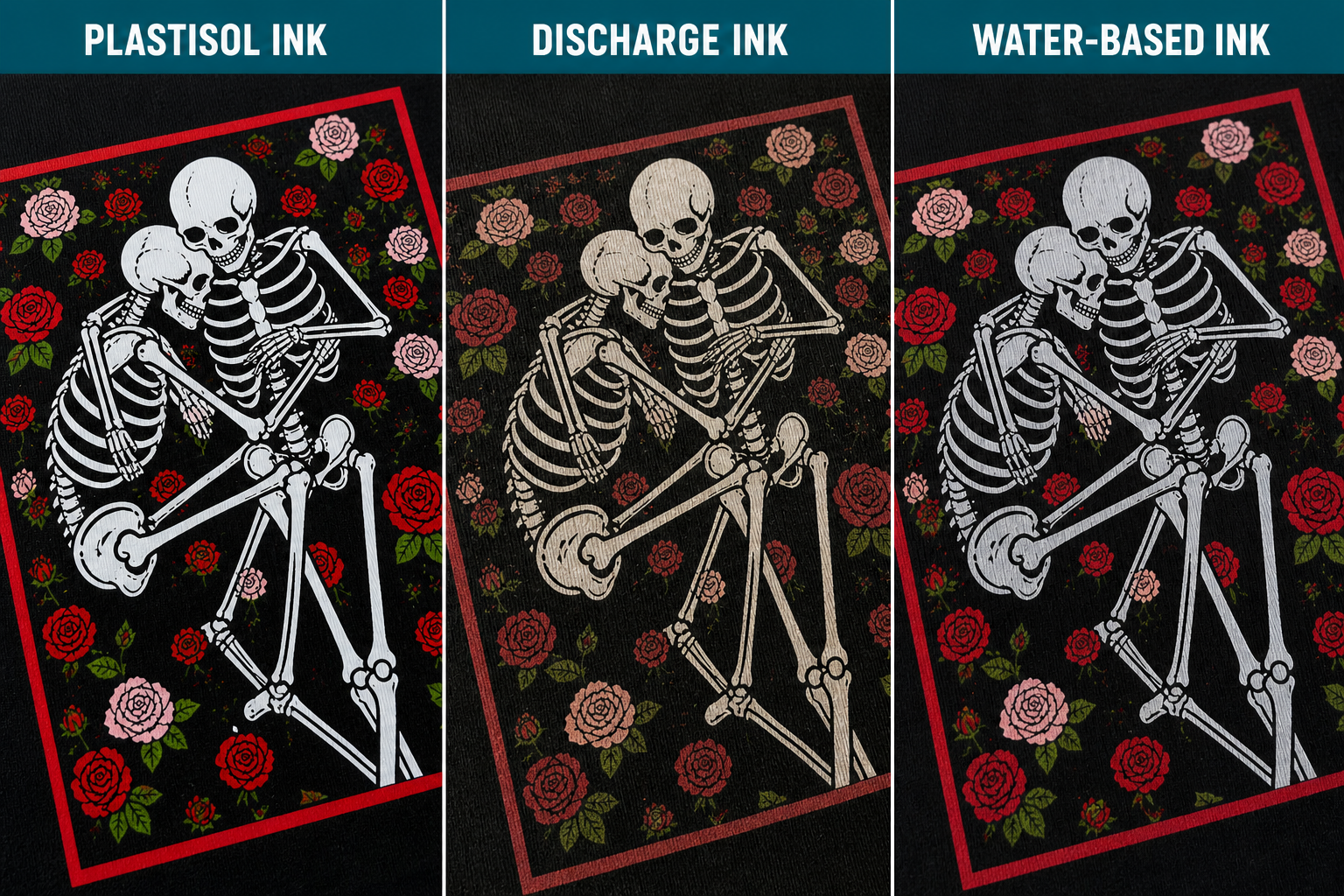
FactorPlastisolDischargeWater-BasedHand FeelSits on fabric, noticeable on large printsUltra-soft — part of the fabricUltra-soft — part of the fabricColor VibrancyBold, fully opaque, Pantone-accurateMuted, vintage, organicSoft, muted, works best on light garmentsDurability100+ washesVery durable when cured correctly30–40 washes (varies by curing)FabricAny — cotton, poly, blends100% cotton, reactive-dyed only100% cotton preferredDark GarmentsYes — full opacityYes — removes dye chemicallyStruggles without underbaseBreathabilityReduced in printed areasMaintainedMaintainedBest ForUniforms, logos, poly fabrics, durabilityFashion, merch, vintage, dark cottonPremium light-garment apparel
If you've spent more than five minutes researching custom screen printing, you've probably run into the same oversimplified advice: "plastisol is durable but stiff," "water-based is soft and eco-friendly," "discharge gives you that vintage vibe."
Those aren't wrong exactly — but they leave out everything that actually matters when you're picking an ink for your project. At IndyInk, we work with all three inks daily. We've seen what happens when the wrong ink meets the wrong fabric, and we've seen what a perfect match looks like on a finished garment. This guide is the real breakdown.
First: How Each Ink Actually Works
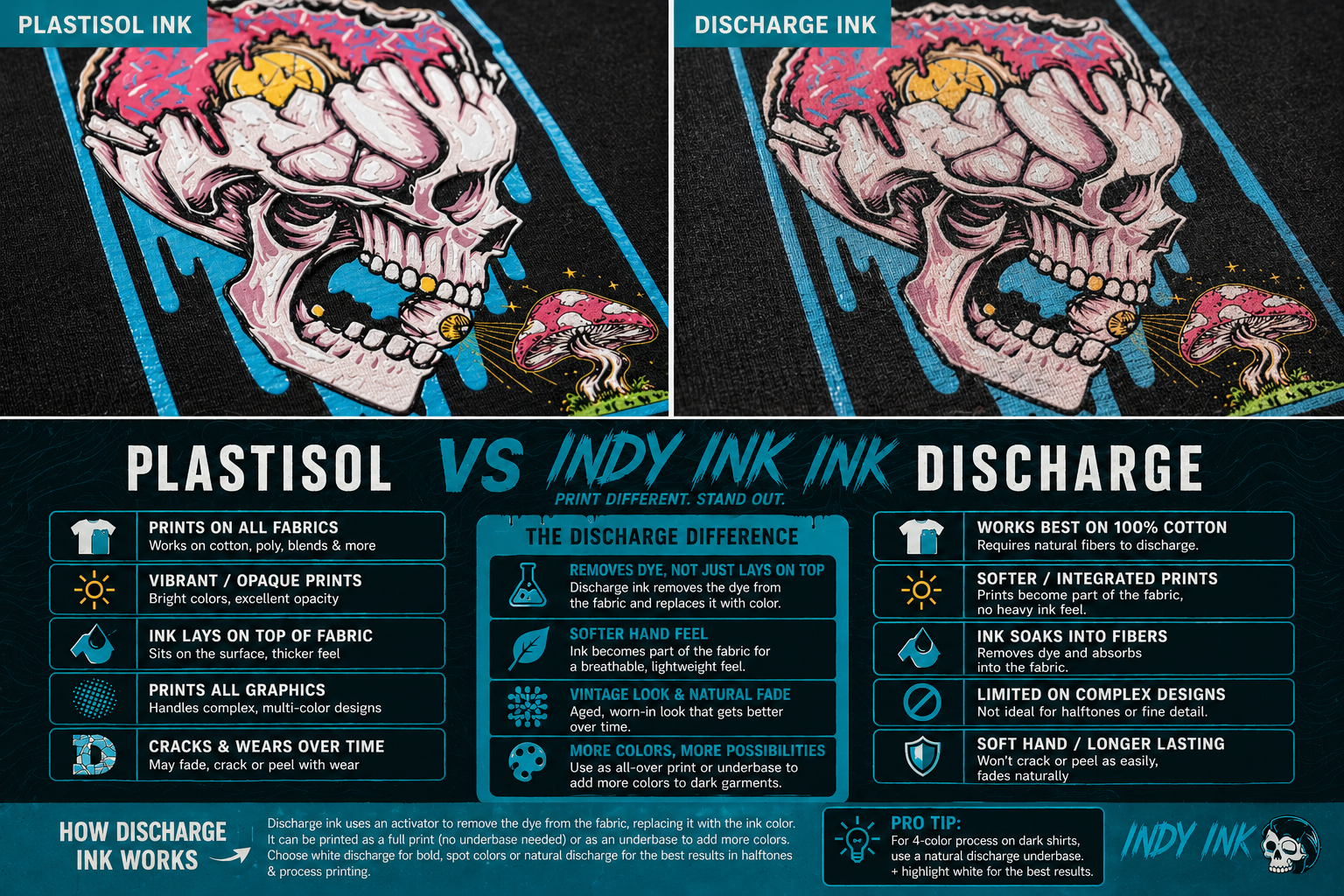
The biggest difference between these three inks isn't texture or color — it's how they interact with fabric at a chemical level. Once you understand that, everything else clicks.
Plastisol sits on top of the fabric. It's made of PVC particles suspended in a liquid plasticizer. When you run it through a conveyor dryer at 310–320°F for 30–45 seconds, the plasticizer evaporates and the PVC fuses into a solid, flexible film right on the surface of the shirt. You're essentially bonding a thin layer of plastic to the fabric.
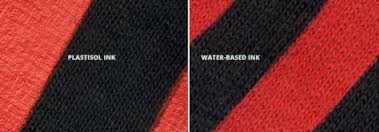
Water-based ink penetrates into the fabric. The pigments are carried in a water-based medium that soaks into the textile fibers and becomes part of the fabric structure. When you touch a water-based print, you're not touching ink — you're touching the fabric itself, with color in it. That's why it feels like nothing.
Discharge ink removes the fabric's existing dye and replaces it. It contains a discharge agent that, when activated by heat, chemically strips the garment's original color. You're not adding a layer — you're altering the fabric itself. The result is a print that's soft like water-based, but works on dark garments where water-based would be invisible.
Keep those three mechanisms in mind as you read the rest of this guide. They explain everything.
Plastisol: The Industry Standard (For Good Reason)
Plastisol has been the dominant screen printing ink for decades. That's not inertia — there are real, technical reasons it became the standard and why it's still the right choice for most projects.
What Makes Plastisol Great
Color accuracy and vibrancy. Plastisol is the gold standard for Pantone matching. Because it's opaque, colors look exactly the same whether you're printing on a white shirt or a black one — the fabric color underneath doesn't affect the result. If your design includes specific brand colors that need to look identical across a run of 500 shirts in five different colorways, plastisol is your ink.
Works on virtually any fabric. Cotton, polyester, poly-cotton blends, performance textiles — plastisol handles them all without formulation changes. Water-based and discharge are both cotton-only. Plastisol isn't. That matters enormously if you're printing on athletic jerseys, performance wear, or any fabric with synthetic content.
Durability that outlasts the alternatives. A properly cured plastisol print will hold up through 100+ washes while maintaining its color and detail. Water-based typically starts showing wear around 30–40 washes. Digital printing fades even faster. For workwear, uniforms, or anything that gets washed constantly, plastisol isn't just the convenient choice — it's the responsible one.
Production consistency. Plastisol doesn't dry in the screen during a production run. You can print 500 shirts without stopping to clean the screen, which keeps quality consistent and keeps your costs down on larger orders.
Special effects nobody else can do. Puff printing creates raised, three-dimensional surfaces you can feel with your fingertips. Metallic and pearlescent inks add premium shimmer. Fluorescent colors glow under blacklight. High-density printing creates substantial texture that digital printing can't replicate. These aren't gimmicks — for the right brand, they're a serious differentiator.
Where Plastisol Has Limits
Hand feel on large prints. Because plastisol sits on top of the fabric, you can feel it — especially on big, solid designs. On a large chest print, it can feel thick or slightly rubbery. Modern techniques (thinner ink deposits, soft-hand additives, higher mesh counts) can minimize this, but it will always be more noticeable than an ink that penetrates the fabric.
Breathability. That surface layer reduces the fabric's natural breathability in the printed area. For athletic wear or large prints on lightweight shirts, this is worth considering.
Environmental profile. Plastisol is PVC-based and requires solvent cleanup. Modern phthalate-free formulations have improved things significantly, but if your brand's sustainability story is central to your identity, that's worth factoring in.
Plastisol Is the Right Call When:
- Printing on polyester, poly-blends, or any synthetic fabric — it's the only option that works
- Precise Pantone color matching is required across a multi-garment run
- Long-term durability matters: workwear, uniforms, athletic gear that gets washed constantly
- You want special effects — puff, metallic, fluorescent, or high-density texture
- Your design has fine details, tight registration, or intricate logo work
- Large production runs where consistency between the first shirt and the last matters
Discharge: The Secret Behind That Soft, Vintage Look
Discharge printing is what separates a premium band tee from a basic screen print. If you've ever picked up a shirt and thought "how is this print so soft?" — that was almost certainly discharge.
How Discharge Actually Works
Discharge ink contains a discharge agent — a chemical activator that strips dye from the fabric when heat is applied. When the garment hits roughly 230°F in the dryer, the reaction begins. By 260°F, the dye removal is mostly complete. The discharge agent removes the shirt's original color, and replacement pigments are simultaneously deposited into those now-empty fibers.
You're not adding a layer of ink. You're changing the fabric itself. That's why the print feels like nothing — because it essentially is the fabric now, just a different color.
What Discharge Does Exceptionally Well
Softest possible hand feel. There is no softer screen print than discharge. The print is part of the fabric — not on top of it. Even on a large, solid chest print, you can barely feel it's there. For premium apparel where the wearability of the garment is part of the product, this is the move.
Authentic vintage and worn-in aesthetic. Discharge naturally produces slightly muted, lived-in colors — not because it's imprecise, but because of how the chemistry works. The results have an organic quality that plastisol, no matter how well executed, just can't replicate. Streetwear brands, fashion labels, and band merch all lean on this heavily.
Breathability. Since discharge works within the fiber structure rather than on top of it, the fabric breathes naturally. It's especially valuable for warm-weather pieces or any garment where comfort during wear matters.
Handles pockets, seams, and zippers. Because discharge penetrates into the fabric rather than building on top of it, it prints beautifully across seams, over pockets, and onto areas where a plastisol ink film would crack or peel.
Large, solid print areas look and feel incredible. Where plastisol can feel heavy on a big block of color, discharge excels there. The more fabric it covers, the more impressive the result.
The Real Limitations of Discharge
Fabric requirements are strict. Discharge only works on 100% cotton (or very high cotton content) garments that have been dyed — not pigment colored, not treated with certain finishes. Polyester doesn't discharge. A lot of blended fabrics won't work. Before you commit to discharge on a project, we verify the specific garment and dye lot.
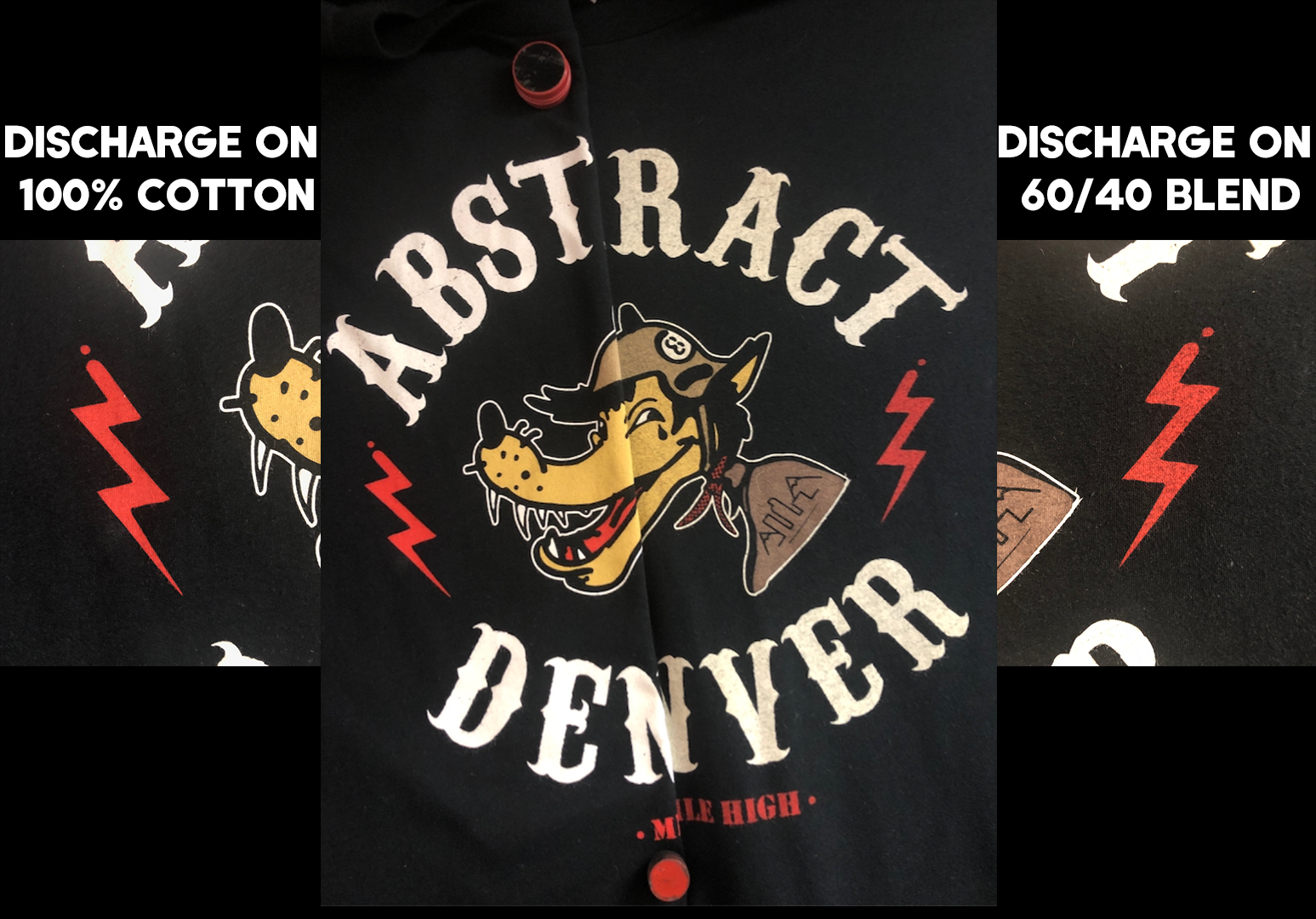
Not all colors discharge predictably. Black and navy typically discharge beautifully to a soft cream or off-white. Royal blue, purple, and forest green? Those can produce inconsistent, unpredictable results depending on the dye composition. We always run test prints before committing to a full production run on any non-standard garment color.
Colors are muted by design. Discharge doesn't give you Pantone-accurate, vivid colors. It gives you something that looks lived-in and authentic. If your design calls for punchy, saturated color, discharge isn't the right tool.
Curing requires precision. Discharge needs consistent high heat, 90–120 seconds of dwell time, and active airflow to vent steam and fumes from the chemical reaction. Without proper ventilation, you get ghosting, odor, and poor wash durability. This is a shop that knows what it's doing kind of ink — not something to cut corners on.
Fine lines and tight logos aren't ideal. Discharge works best with organic, loose designs. Ultra-fine text, small typography, or intricate logo work can bleed slightly due to the nature of the chemical reaction. For those designs, plastisol is more precise.
Discharge Is the Right Call When:
- Printing on 100% cotton dark garments — black, navy, charcoal
- Ultra-soft hand feel is the priority: fashion, band merch, premium branded apparel
- The aesthetic calls for vintage, worn-in, or organic character
- Large, bold, graphic designs where slightly muted color is a feature, not a flaw
- Breathability matters — warm-weather pieces, lightweight styles, everyday wear
- Printing over seams, pockets, or uneven surfaces where a surface film would crack or peel
Water-Based: When Light Garments Call for Softness
Water-based ink is discharge's sibling — same soft feel, different approach. Instead of removing dye, it simply soaks pigment into the fabric fibers. The result is a print that's part of the shirt, not on it.
Where Water-Based Shines
Water-based is the ideal choice for light-colored 100% cotton garments where you want maximum softness and breathability. White, natural, cream, and light gray shirts show water-based colors beautifully. It's particularly well-suited for brands emphasizing premium feel, heritage aesthetics, or natural/organic positioning.
Fine details and thin lines print cleanly with water-based because the ink doesn't build up thickness the way plastisol does.
Where Water-Based Falls Short
Water-based inks are semi-transparent, which means they struggle on dark garments. The shirt's color bleeds through and muddies the design — you'd need a white underbase to get coverage, which partially defeats the purpose. It's also cotton-only, and it dries in the screen during production, requiring more active management during longer runs.
Head-to-Head: Quick Reference
How to Choose: A Simple Decision Framework
Start with your fabric. If your shirt is polyester, a poly-blend, or any synthetic — plastisol is your only option. Full stop. Water-based and discharge don't work on synthetic fibers.
Then consider your aesthetic. If you need bright, punchy, Pantone-accurate colors — plastisol. If you want that soft, muted, vintage look — discharge or water-based.
Then think about the garment color. Light shirts with a soft print? Water-based. Dark shirts with soft, vintage-style colors? Discharge. Any shirt where durability and color accuracy trump everything else? Plastisol.
Finally, consider your design's detail level. Fine text, tight logos, precise registration across many colors — plastisol is most reliable. Large, organic, graphic designs — discharge thrives.
Common Misconceptions — Cleared Up
"Plastisol always feels stiff." Not true. Modern techniques — thinner ink deposits, soft-hand additives, higher mesh counts — produce plastisol prints that feel surprisingly soft. The feel depends on how it's applied, not just what it is.
"Discharge works on any dark shirt." It doesn't. It requires 100% cotton, reactive dyes, and the right garment colors. Royal blue, purple, and forest green discharge unpredictably. We always verify the garment and run tests first.
"Water-based is always eco-friendly." Not automatically. Environmental impact depends on the specific formulation, production water usage, and disposal. Don't take "water-based" as a shortcut to green claims — look at the whole process.
Caring for Your Screen-Printed Garments
Regardless of ink type, a few simple habits extend the life of any print dramatically. Wash inside out in cold water. Tumble dry on low heat or hang dry. Never iron directly on the print — if you need to press it, flip the garment inside out or use a pressing cloth. For discharge and water-based prints especially, avoid harsh detergents that can break down the dye chemistry over time.
Still Not Sure Which Ink Is Right for Your Project?
That's what we're here for. Bring us your design, your garment, and your priorities — and we'll tell you exactly which approach makes the most sense. We've run tens of thousands of jobs across all three ink types, and we'd rather spend five minutes on the phone getting it right than have you receive something that isn't what you envisioned.